
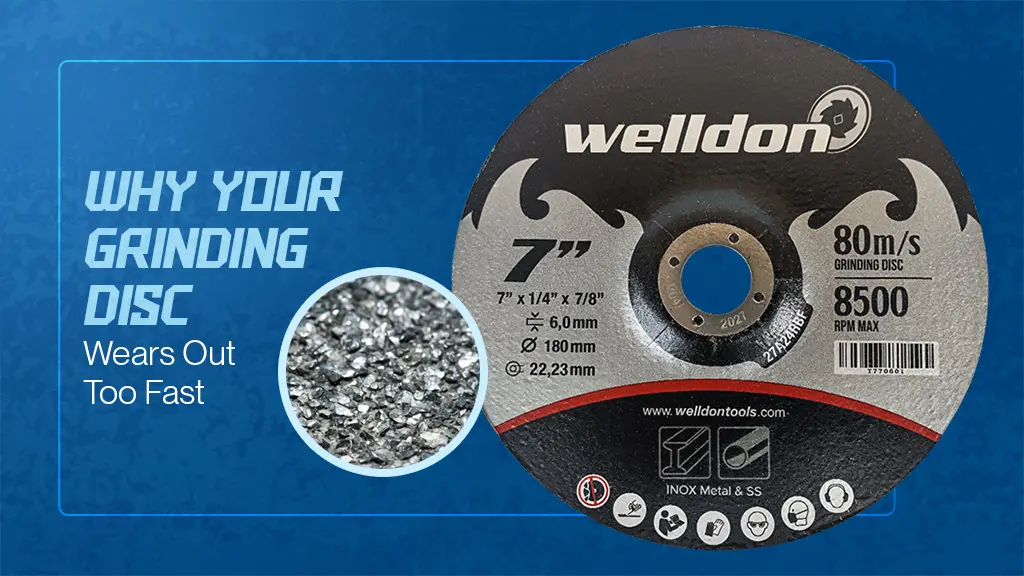
Grinding discs are essential tools in fabrication shops, construction sites, metalworking industries, and maintenance operations. Whether you’re smoothing welds, removing rust, shaping steel, or preparing surfaces, grinding performance directly impacts productivity. But one of the most common frustrations professionals face is rapid disc wear.
If you’ve ever wondered why your grinding disc wears out fast, you’re not alone.
Premature grinding disc wear can lead to higher operating costs, frequent replacements, inconsistent finishing, and unnecessary downtime. More importantly, it often signals deeper issues related to technique, disc quality, or tool compatibility.
The good news? In most cases, fast disc wear is preventable.
By understanding the hidden causes behind short disc life and applying the right grinding disc life tips, you can significantly improve disc performance, reduce costs, and get better results from every job.
The Real Cost of Fast Grinding Disc Wear
A grinding disc that wears out too quickly does more than just increase replacement costs.
Hidden Costs Include:
- Frequent downtime for disc changes
- Reduced productivity
- Poor surface quality
- Higher labor costs
- Increased grinder strain
- More material waste
In industrial environments, these issues multiply fast. For workshops handling large-scale grinding operations, choosing the best grinding disc for steel and using it correctly can make a major difference in overall profitability.
Understanding How Grinding Discs Actually Wear
All grinding discs naturally wear down over time. Abrasive grains gradually break away as they grind material, exposing fresh cutting edges beneath. This is normal wear.
However, premature wear happens when discs degrade faster than designed due to avoidable mistakes.
Signs Your Grinding Disc Is Wearing Too Fast:
- Rapid shrinking in disc diameter
- Uneven wear patterns
- Excessive heat buildup
- Disc glazing (smooth, shiny surface)
- Reduced grinding speed
- Increased vibration
If these signs appear early, your grinding process likely needs correction.
Wrong Disc for the Material
One of the biggest reasons why grinding discs wear out fast is incorrect disc selection.
Not all grinding discs are made for every material.
Common Mistakes:
Using standard discs on stainless steel:
This may cause contamination, poor grinding efficiency, and faster wear.
Using light-duty discs on heavy steel:
Thin or lower-grade discs can break down quickly under aggressive grinding conditions.
Using one disc for everything:
Different metals generate different heat, friction, and wear demands.
Material-Specific Selection Matters:
Carbon Steel:
Requires aggressive stock-removal discs.
Stainless Steel:
Needs contamination-free abrasives with heat resistance.
Aluminum:
Requires specialized abrasives to avoid clogging.
Cast Iron:
Demands durable discs with strong grain retention.
Choosing the best grinding disc for steel or specific materials ensures longer life and safer performance.
Applying Too Much Pressure
A common misconception is that pushing harder makes grinding faster.
In reality, excessive pressure is one of the top grinding disc common mistakes.
Why Too Much Pressure Is Harmful:
- Generates excess heat
- Damages abrasive grains
- Causes glazing
- Strains the grinder motor
- Wears the disc unevenly
Grinding discs are designed to cut efficiently with controlled pressure—not force.
Pro Tip:
Let the abrasive do the work. Maintain steady, moderate pressure for better lifespan and smoother grinding.
Incorrect Grinding Angle
Grinding angle has a huge impact on disc performance.
Holding the grinder at the wrong angle can dramatically shorten disc life.
Common Issues:
- Too flat = increased friction and glazing
- Too steep = edge wear and disc instability
Recommended Approach:
For most grinding applications, maintain an angle around 15–30 degrees, depending on the task.
Correct angle improves:
- Material removal
- Disc efficiency
- Surface quality
- Operator control
Poor Quality Grinding Discs
Sometimes the problem isn’t technique—it’s product quality.
Low-cost discs often use inferior abrasive grains and weak bonding materials, leading to:
- Faster wear
- Reduced cutting power
- More breakage
- Inconsistent performance
Why Premium Grinding Discs Last Longer
- Stronger grain structure
- Better heat resistance
- Superior bonding
- More consistent wear patterns
For industrial users, premium abrasives often lower long-term costs despite higher upfront pricing.
Grinding Disc Overheating and Glazing
Grinding disc overheating is a major reason for reduced lifespan.
When discs become too hot, abrasive grains can dull, and the surface may glaze over—creating a smooth layer that stops effective grinding.
Common Causes of Overheating:
- Continuous heavy pressure
- Wrong RPM settings
- Poor airflow
- Using the wrong disc type
Effects:
- Slower grinding
- Burn marks
- Faster wear
- Surface hardening
Prevention:
- Use cooling breaks
- Match RPM correctly
- Avoid forcing the tool
- Select heat-resistant abrasives
Incorrect RPM or Tool Compatibility
Every grinding disc has a maximum RPM rating.
Ignoring this can lead to:
- Fast wear
- Disc instability
- Reduced efficiency
- Serious safety hazards
Important Rule:
Never exceed the disc’s rated RPM.
Using a grinder with improper speed can destroy even high-quality discs prematurely.
Always check:
- Disc RPM rating
- Grinder speed
- Tool compatibility
Improper Storage and Moisture Damage
Many users overlook storage, but environmental conditions affect abrasive quality.
Poor Storage Conditions:
- Humidity
- Water exposure
- Extreme temperatures
- Physical pressure or bending
These factors can weaken disc structure and shorten lifespan before use.
Best Practices:
- Store in dry environments
- Keep discs flat
- Avoid moisture
- Use original packaging
Surface Contamination Can Destroy Disc Life
Grinding over rust, paint, coatings, or thick scale without preparation increases friction.
This causes:
- Heat buildup
- Disc clogging
- Faster wear
Solution:
Prepare surfaces properly or use abrasives specifically designed for contaminated materials.
Common Grinding Habits That Destroy Disc Life
Many operators unknowingly shorten disc lifespan through poor habits.
Top Mistakes:
- Side loading the disc
- Grinding in one spot too long
- Excessive speed
- Wrong material application
- Using worn-out grinders
- Ignoring vibration issues
Even small corrections can dramatically improve industrial grinding disc lifespan.
Pro Tips to Maximize Grinding Disc Life
If you want to know how to increase grinding disc life, focus on these daily habits:
Best Practices:
- Choose the correct disc for the material
- Match RPM ratings
- Use proper grinding angles
- Apply moderate pressure
- Prevent overheating
- Store discs correctly
- Inspect tools regularly
- Replace damaged discs immediately
These simple habits can reduce costs while improving grinding quality.
Why Welldon Grinding Discs Deliver Longer Life
For professionals who need durability and consistency, abrasive quality matters.
Welldon grinding discs are designed for industrial performance with:
Key Advantages:
- Durable abrasive grain retention
- Heat-resistant bonding
- Consistent stock removal
- Reduced downtime
- Reliable performance across demanding applications
Whether for fabrication shops, weld cleanup, heavy steel grinding, or industrial maintenance, Welldon offers grinding solutions built for productivity.
Final Thoughts: Grinding Smarter Saves Money
If your grinding discs wear out too fast, the problem often isn’t just the disc—it’s the combination of product quality, operator habits, technique, and tool compatibility.
Understanding why grinding disc wears out fast helps professionals make smarter choices that improve:
- Productivity
- Safety
- Cost efficiency
- Surface quality
- Equipment lifespan
By selecting the right abrasive, avoiding common grinding disc mistakes, and following proper grinding disc life tips, you can dramatically increase disc longevity.